Own Product vs Affiliate Marketing: The Easy Way To Add A Video Course To What You Already Do

If you are an affiliate marketer, you know the feeling: you do the work, the buyer pays the vendor, and you earn a share. A product of your own changes that. This guide compares own product vs affiliate marketing, explains why a course is one of the easier ways to add a product of your own, and shows how to start without giving up what already works.
The short answer on own product vs affiliate marketing
You do not have to choose. Affiliate marketing is a fast, low-risk way to earn from other people’s products. An own product gives you control of the price, the offer and the customer relationship, but you take on the work of making it and the risk that it does not sell. Most people do best by keeping their affiliate income and testing one small product alongside it, such as a short video course.
Own product vs affiliate marketing: the real differences
| Question | Affiliate marketing | Your own product |
|---|---|---|
| Upfront work | Low: pick a product and promote it | Higher: create, price and list it |
| Control of price and offer | None | Full |
| Customer relationship | The vendor owns it | You own it |
| What you earn per sale | A share, set by the vendor | The sale price, minus platform costs |
| Main risk | Vendor changes terms or closes the offer | The product does not sell |
This table is our general summary. It is not a forecast of what you will earn from either.
Why a course is a practical first product
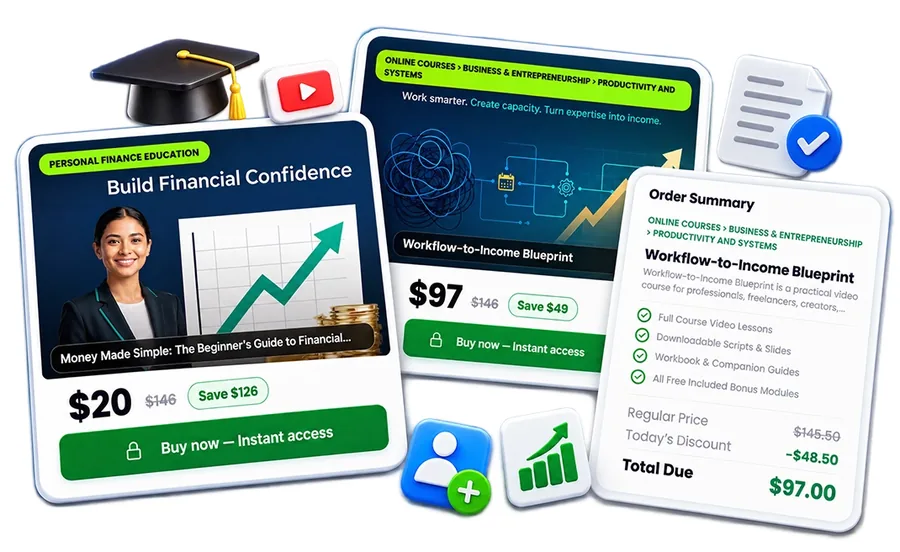
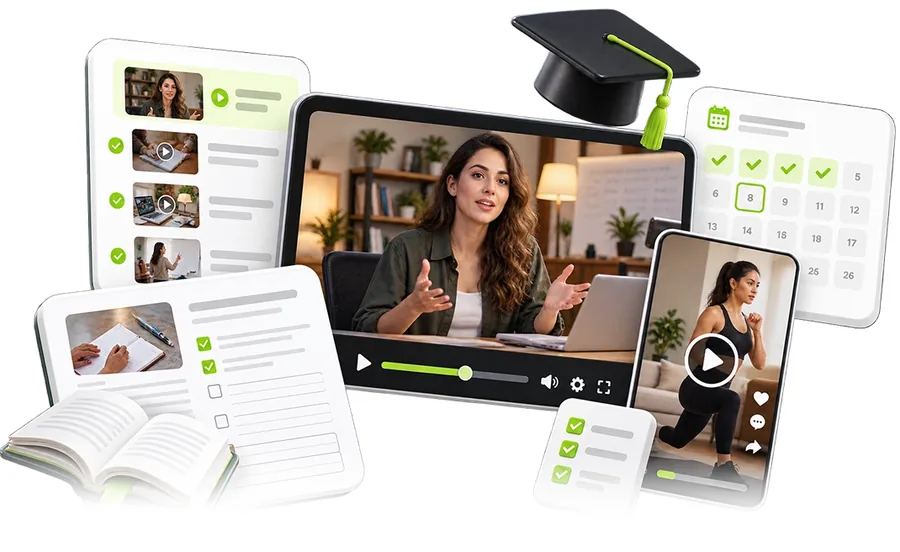
A course can be made from knowledge you already have, it needs no stock or shipping, and it can be sold on a marketplace or your own page. The old obstacle was production: writing scripts, recording yourself, editing, making slides and a cover, and writing a listing. That is the grind tools like CreatorClaw AI try to remove. Per the vendor, you type a topic, or upload a PDF or link a video, and 7 AI agents build the course, the lesson videos with an AI voiceover, a marketplace listing and promo clips.
A realistic way to add a product of your own
- Start from what your audience already asks you. The questions your readers, subscribers or followers send are your best course topics.
- Keep it small. One clear outcome, a few short lessons, a workbook. A small finished course beats a big unfinished one.
- Use AI for production, not for judgment. Let the tool draft scripts, slides and videos, then read and fix everything. Facts, tone and promises are your responsibility.
- Test where your buyers are. List it on one marketplace, or put it on a direct page for your own list. See Udemy vs Skillshare vs Gumroad vs Teachable for how to choose.
- Keep promoting affiliate offers that fit. Your own product can sit next to them. A free mini lesson can also build an email list.
What CreatorClaw AI offers, and what it does not
Per the vendor, the front end costs $17 at checkout, includes a commercial license so you can sell what you make, and has a 30-day money-back guarantee. The JV doc says the front end is limited to 10 courses a month, 30 minutes of video render, standard voices and 1 marketplace format. There is an add-on and 5 upgrades after the front end, which you can read about in our CreatorClaw AI OTO guide, and our full review lists every place the vendor’s pages disagree.
What it does not do: bring you students, guarantee approval on a marketplace, or guarantee sales. The vendor’s own sales page says it does not guarantee sales or income. We have not hands-on tested the output.
How to tell if a course idea is worth making
Before you make anything, check three things. First, do real people already ask about this topic? Look at the questions your audience sends you, at forums where people ask for help, and at what existing courses promise. Second, can you explain the outcome in one sentence? If you cannot, the course is too vague. Third, can you finish it? A small course you actually ship is worth more than a big one that stays a draft. None of these checks guarantees sales, but they stop you from spending time on an idea nobody wants.
A 30-day plan to test a first product
- Days 1 to 3: choose the topic and write the one-sentence outcome.
- Days 4 to 10: build the course with your tool of choice, then read and watch every lesson and fix the weak ones.
- Days 11 to 14: write an honest listing and a short free mini lesson.
- Days 15 to 30: publish in one place, share it with your list or followers, answer every question, and note what people ask. Use that to improve the next version.
This is a plan for learning, not a promise of income. If nobody buys, you still end the month with a finished course, a listing and a clearer idea of what your audience wants.
Risks of an own product vs affiliate marketing
- Quality risk. An AI first draft can contain mistakes. Your name is on the final course.
- Demand risk. Many courses on popular topics already exist. A narrow topic and a clear promise help.
- Platform risk. Marketplaces make their own approval decisions and change their rules.
- Time risk. Production gets faster, but checking, listing and promoting still take time.
- Promise risk. Do not promise income or results you cannot back up, in the course or in the listing.
Frequently asked questions about own product vs affiliate marketing
Is own product vs affiliate marketing an either-or choice?
Neither is better in every case. Affiliate marketing is faster and lower risk. An own product gives you control and a customer relationship but needs more work and may not sell. Many people do both.
Do I need an audience to sell a course?
A marketplace can bring some traffic, but a direct page needs your own. Either way, an audience or a clear way to reach buyers helps a lot.
Can an affiliate marketer make a course with AI?
Per the vendor, CreatorClaw AI is built for beginners with no camera or editing skills, and one of its personas is the affiliate tired of earning half on someone else’s product. Quality depends on your topic and how carefully you check the result.
Will a course make me money?
Nobody can promise that. It depends on your topic, your listing, your promotion and your market, and the vendor says it does not guarantee sales or income.
What is the lowest-risk way to test it?
Build one short course on a narrow topic, check every lesson, list it in one place and use the refund window of the tool you try if it does not fit. CreatorClaw AI states a 30-day money-back guarantee.
Final word
Own product vs affiliate marketing is not a fight, and the own product vs affiliate marketing choice does not have to be either-or. Affiliate income can keep paying while you test a product of your own. A short video course, made from knowledge you already have and checked carefully, is one of the lighter ways to try it. Start small, keep your promises honest, and let real results decide what you do next.
MMO Maker is an affiliate for CreatorClaw AI and earns a commission on purchases through our links, at no extra cost to you, in line with the FTC’s endorsement guidelines. That does not change what we have written here. For more AI tools reviewed the same way, see our guides to the best AI tools for affiliate marketing and the best AI tools for making money online.